
High-Fiber Lunch Bowls on a Budget Without Feeling Restricted

Why High-Fiber Lunch Bowls works when the goal is sustainable fat loss
Many people try to lose weight by making one dramatic change, then wonder why hunger, fatigue, or inconsistency pulls them back into old habits. High-Fiber Lunch Bowls works differently because it creates structure. It helps with slower digestion, more stable appetite, and better meal satisfaction, which means fewer impulsive choices and a steadier routine from morning to evening. That kind of consistency is often the difference between a short burst of effort and a result that actually lasts.
There is also a practical benefit that matters in day-to-day life. When your routine includes high-fiber lunch bowls, it becomes easier to manage appetite, improve meal timing, and avoid the mental exhaustion that comes from making too many decisions while already tired. Instead of asking yourself to be disciplined every hour, you build a system that keeps supporting you even on average days.
This is why the habit pairs well with protein awareness, hydration, and meal prep. Weight loss rarely comes from one isolated tactic. It comes from several sensible behaviours that reinforce each other. When those pieces line up, progress tends to feel calmer, more measurable, and much easier to maintain.
What high-fiber lunch bowls looks like when your schedule is imperfect
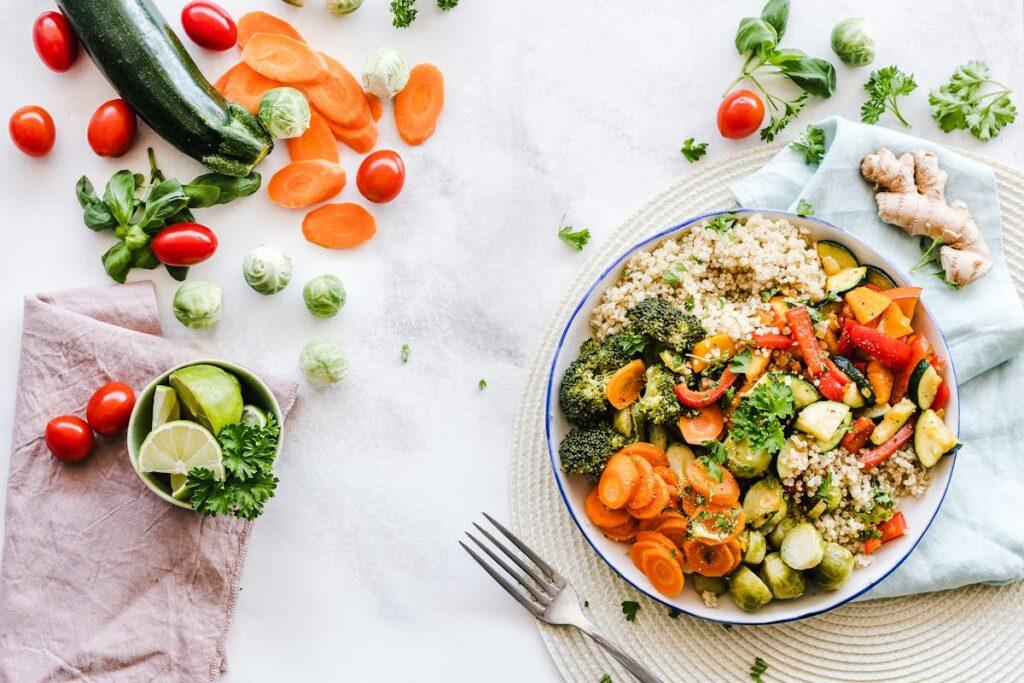
The most useful way to apply this habit is to simplify it. Start with building lunch around vegetables, legumes, and a protein source, using one satisfying dressing instead of many extras, and keeping a dependable bowl formula ready for repeat use. Those steps are practical because they reduce friction, which matters when when you want better results without relying on expensive products or specialty foods. You do not need a perfect routine. You need a version that still works on days when time, energy, or attention is limited.
Examples make the habit easier to repeat. In this case, that might mean lentils with roasted vegetables and tahini, chicken, beans, greens, and rice, tofu, edamame, cabbage, and quinoa, and cottage cheese, chickpeas, and crunchy salad vegetables. These choices are not special because they are trendy. They are helpful because they combine convenience with enough substance to keep you satisfied and less reactive. That is exactly what creates better decisions later in the day.
Context matters too. For this angle, the best adjustments are buying staple ingredients in larger quantities, choosing versatile basics you can use more than once, and building meals around affordable foods with high staying power. Each adjustment lowers the chance that one stressful moment turns into an entire day of overeating. A routine that survives real life is far more powerful than a perfect plan that only works on quiet days.
Mistakes that quietly slow progress
A common mistake is assuming that more intensity automatically means better results. With high-fiber lunch bowls, the usual problems are making the meal too small to satisfy you, using too little protein, and treating lunch like an afterthought and overeating later. Each of these errors makes the habit feel harder, more restrictive, or less effective than it really needs to be.
The solution is not to panic or start over. It is to notice the pattern and correct it early. If one day goes off-track, return to the easiest version of the habit at the next opportunity. That recovery mindset matters, especially when simple and affordable habits often outperform complicated expensive ones. Momentum grows when you get better at restarting quickly, not when you demand perfection.
One week of practical implementation
Monday: Establish your baseline and notice where this habit already fits into the day.
Tuesday: Use lentils with roasted vegetables and tahini as the easiest version of the habit.
Wednesday: Repeat the habit in a real-life setting where cost matters is usually the hardest part.
Thursday: Prepare one small support system such as building lunch around vegetables, legumes, and a protein source.
Friday: Practice the habit again while paying attention to appetite, mood, and energy instead of only the scale.
Saturday: Test the habit in a flexible setting so it still works around errands, social plans, or tiredness.
Sunday: Review what felt realistic, keep one win, and write next week’s easiest repeatable version.
A plan like this works because it turns high-fiber lunch bowls into a repeatable system. That matters much more than one perfect day, especially when the real goal is making weight-loss habits financially sustainable.